|
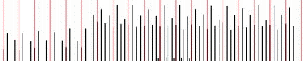
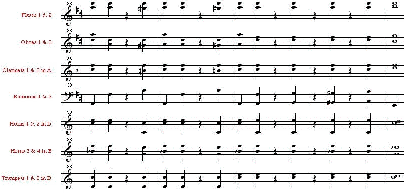
The metric weight of the first theme in figure 46 shows only within the first 23 measures a differentiation which corresponds to the Alla breve, the continuous sequence of eighth notes in the following sections prevents any differentiation of the weight. On the contrary, the metric weight of the wind instruments of the same segment (figure 47) reveals a differentiation starting at measure 23, which accentuates the second beat, whereas in measures 37 ff. even the second and fourth beats of the measures get great metric weights (see also the detailed figure 48). The rhythmic motives of measures 37-40 (see figure 49) supports the emergence of long local meters on these >weak< beats, which has been observed already in analyses of the second movement of this symphony. Indeed, analyses of the other symphonies in Fleischer (2003) support these findings as a characteristic of Brahms’ works in general, as mentioned as well in Frisch (1990).
The isolated analysis of the first violins of this segment in contrast to this shows in large parts great metric weights on the first and third beats, whereas the third beat is the most prominent one (see figure 50). Hence the metric weight of the wind instruments and first violins are complementary and interact in such a way that the analysis of the entire composition results in a metric weight with a lack of |