|
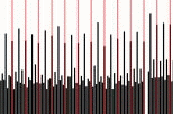
two measures and the corresponding measures over the course of the first 43 measures. But inner metric analysis (see figure 4) suggests a grouping into groups of two measures within the first part of the exposition. Within these groups the second measure is the downbeat, since the metric weight of the first beat of each second measure is greater than those of the first measure. Hence the inner metric structure in this case is unequivocal. The result of inner metric analysis on the other hand corresponds to the suggestion Epstein made concerning the performance of this piece: »From a performance viewpoint, the most efficacious decision is probably to consider the opening measure of the piece an upbeat, leading to a (local) downbeat on the second measure with the entrance of the horns.«11
Furthermore his discussion of the horn’s motives corresponds to the mentioned result of inner metric analysis: »By their attack and by the added texture they create, the horns give an accent or emphasis to the second measure, thus lending it a downbeat quality. This pattern is carried out in the succeeding phrases: the entrances of the horn motive in measures 6, 10, 14 all give downbeat qualities of emphasis to these measures ... .«12 The second part of the metric weight of the entire exposition (measures 44-117) in figure 5 reveals a highest layer built upon the weights of the onsets |


 ,
,  ,
,  ,
,  ,
,  ,
,  ,
,  and so forth of successive measures. Hence the weight does not correspond to the outer metric structure of the time signature
  , but of
  (see figure